

Reversible DUO sheet rolling mill with individual drive of working rolls
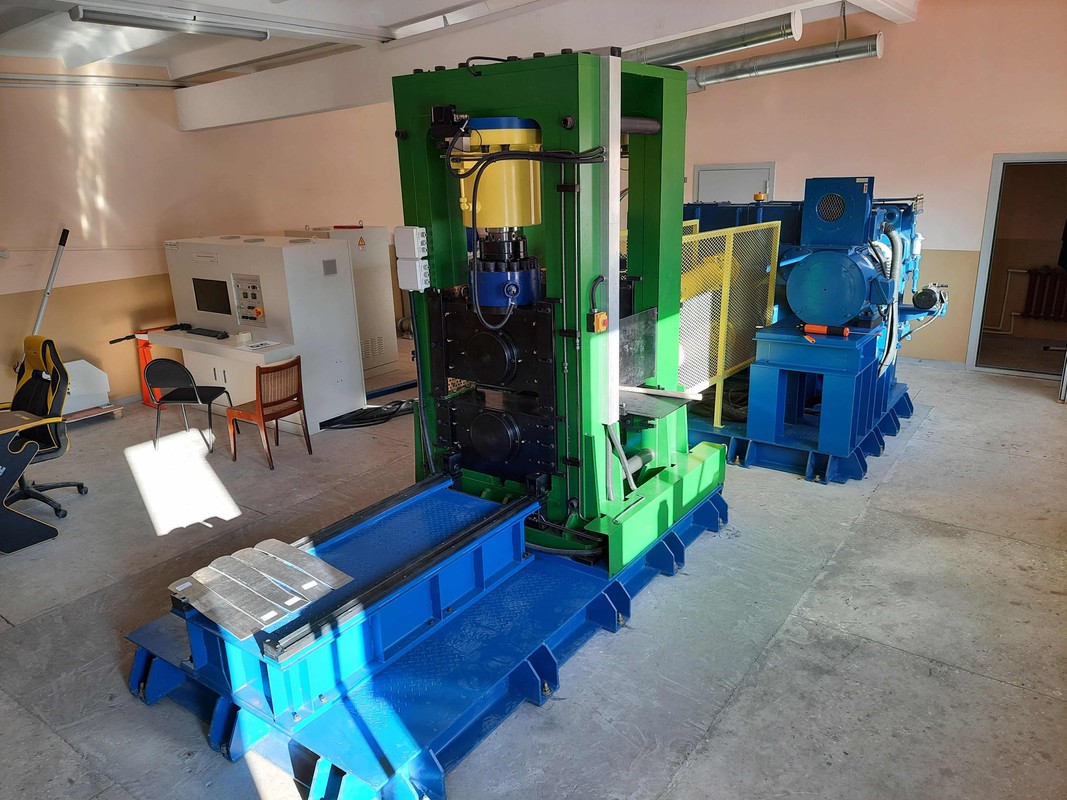
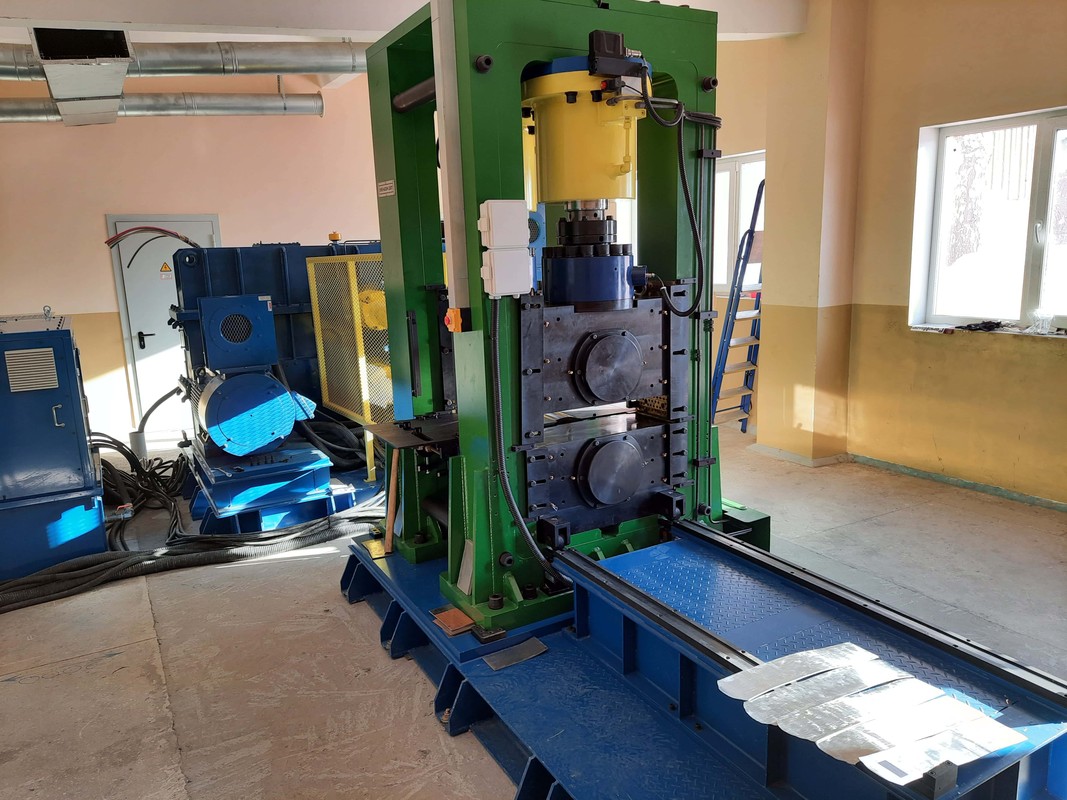
Technical specifications of the reversible DUO sheet rolling mill with individual drive of the working rolls:
- The mill type is a reversible single-stand DUO sheet rolling mill with individual drive of the working rolls.
- The maximum allowable rolling force is 2500 kN (250 t).
- The maximum allowable rolling torque is 2×65 kN·m (2×6.5 t·m).
- The nominal (maximum) diameter of the working rolls is 360 mm.
- The nominal (maximum) rolling speed is 250 mm/s (15 m/min.).
- The direction of rotation of the working rolls is reversible.
- The rolled materials include sheet blanks made of ferrous (Fe) and non-ferrous (Al, Cu, Ti) metals and alloys with a yield strength of up to 1500 MPa.
- The initial dimensions of the input sheet blanks are as follows: maximum thickness of 50 mm and maximum width of 380 mm.
KUKA Robotic Complex
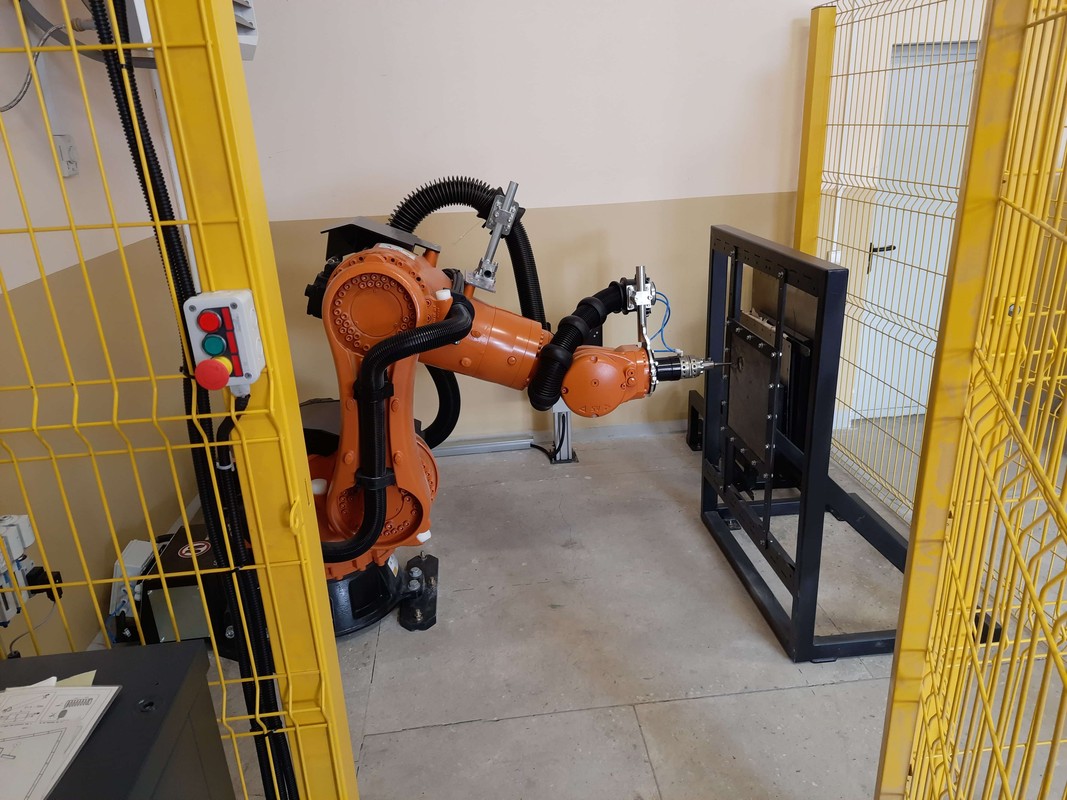
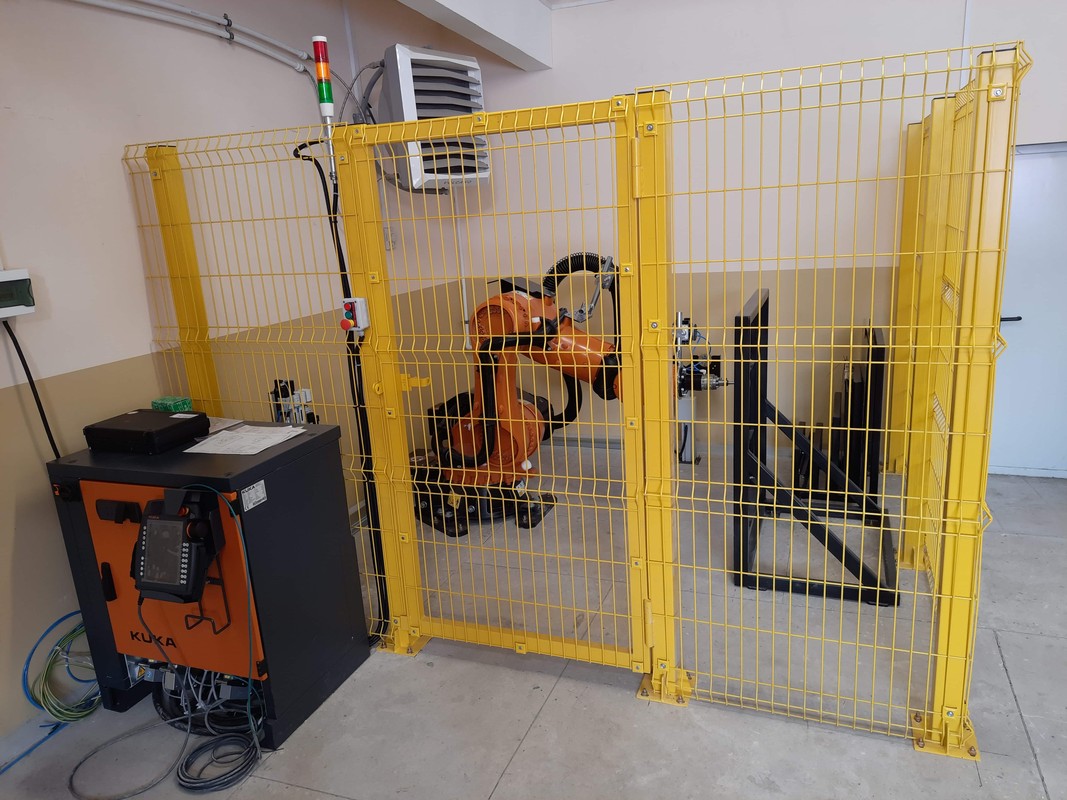
An industrial robot consists of the following components:
- a manipulator;
- a robot control system;
- a portable programming device;
- connecting cables;
- software;
- options and accessories.
Sample preparation line
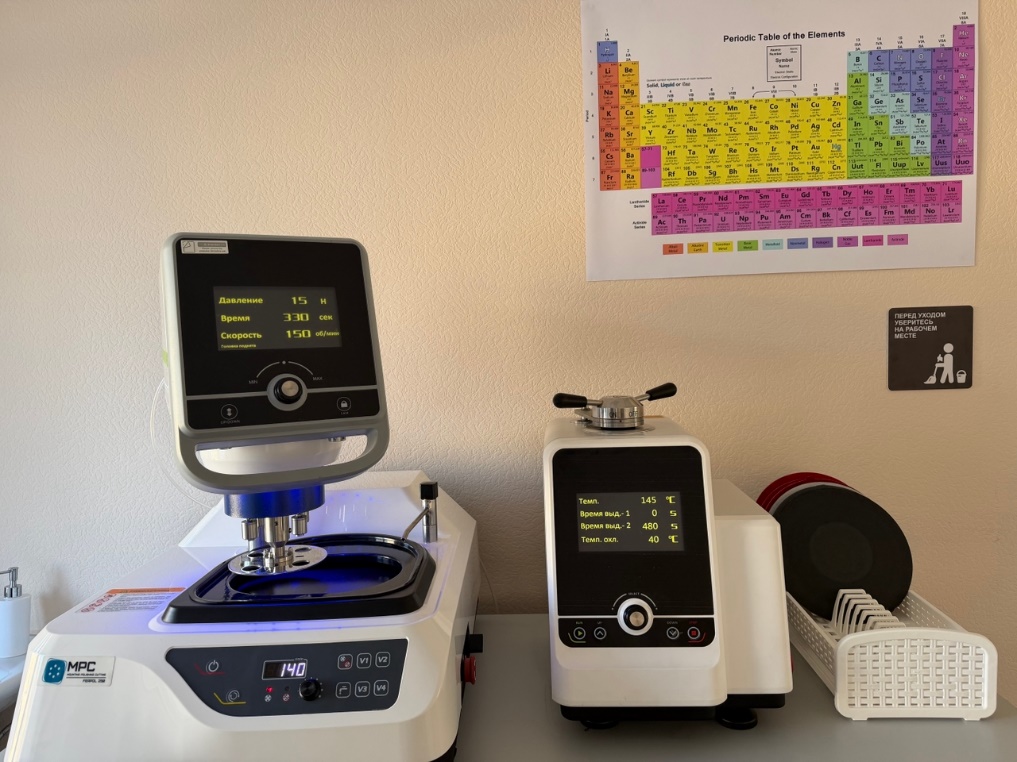
The sample preparation line contains:
- Automatic Mounting Press
- Automatic Sample Grinder & Polisher
Metallographic inverted microscope
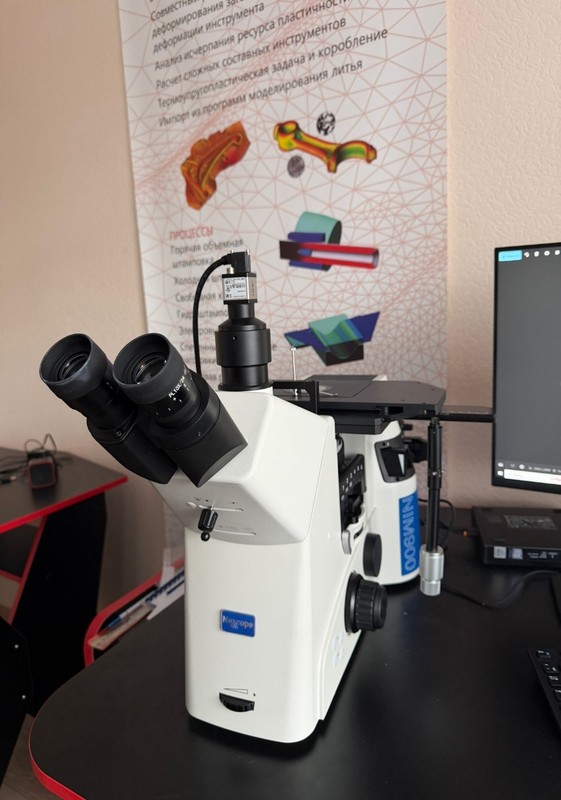
Main features:
- Illumination type - reflected light;
- Contrast methods: bright field, dark field, polarization contrast;
- Total optical magnification: 50, 75, 100, 150, 200, 300, 500, 750, 1000, 1500 times;
- Eyepiece/camera light division (switching of light flow ports): 100/0; 80/20; 0/100;
- 340х230 мм
- Stage table: size 340x230 mm;
- Binocular head with 45° inclination, video output;
- Focusing mechanism: 2-stage focusing, with coarse and fine focusing;
- Minimum optical magnification of the intermediate optical module: 1.0 times;
- Maximum optical magnification of the intermediate optical module: 1.5 times;
Testing capabilities:
- GOST 5639-82. Steels and alloys. Method for determining the grain size by comparison with reference scales;
- GOST 11878-66 Method for determining the content of the ferrite phase by comparison with reference scale;
- GOST 21073.1-75 Determination of the grain size by comparison with the scale of microstructures;
- GOST 8233-56 Steel. Microstructure standards;
- GOST 1778-70 Metallographic method for determining non-metallic inclusions by comparison with a standard;
- GOST 5640-2020 Steel. Metallographic method for evaluating the microstructure of flat steel rolled products by comparison with a standard;
- GOST 3443-87 Castings made of cast iron with different forms of graphite. Method for determining the structure by comparison with a standard.
Stereo Microscope
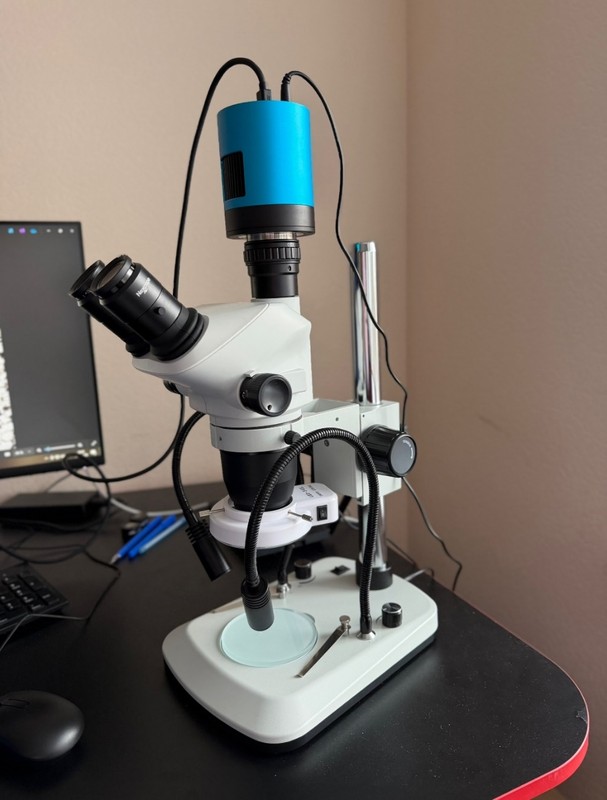
Main features:
- Optical tube - trinocular;
- Type of lighting – LED;
- The coefficient of transformation: 8.45:1;
- The ability to fix the position of the transfocator at the increase: 0.65; 1; 1.5; 2; 2.5; 3; 3.5; 4; 4.5; 5; 5.5 times;
- The angle of the eyepieces is 45 degrees;
- Built-in flexible illuminator;
- Built-in transmitted light source.
Thermal imaging camera
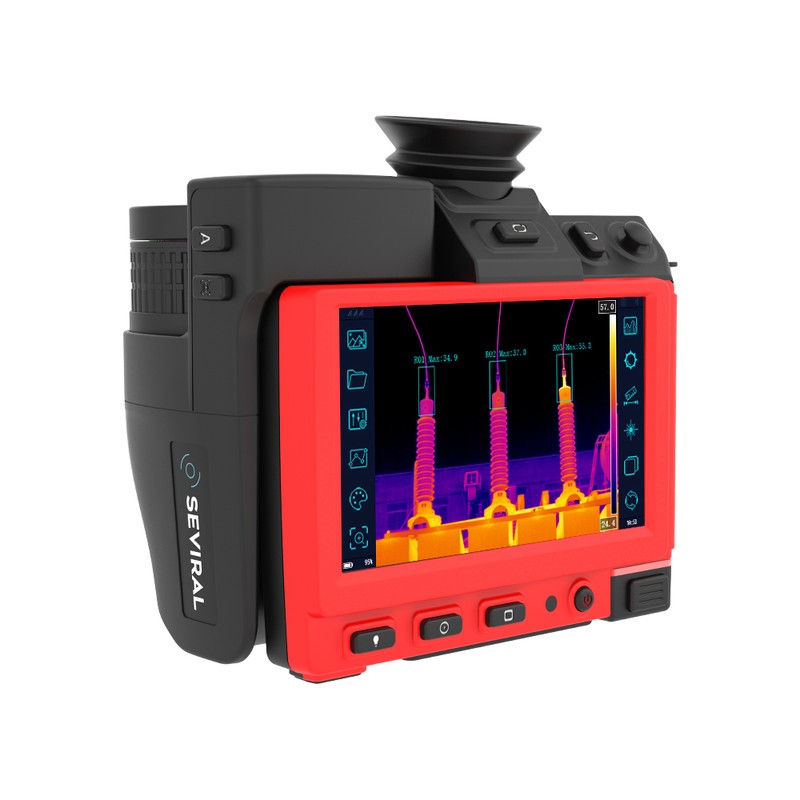
Main features:
- Infrared resolution: 1024 × 768 pixels;
- Temperature sensitivity (NETD): < 40 mK at 30°C;
- Measurement range: from -40°C to +2000°C;
- Display: 5.8″ touch, readable in the sun, high resolution;
- Interchangeable optics: support for 7°, 14°, 24°, 50° lenses;
- Laser rangefinder: up to 40 m, with position display on the IR image;
- Additional features: QR scanner, voice/text annotations, GPS, 4G module.
Shimadzu DUH-211S Dynamic Micro Hardness Tester
Key capabilities:
- Hardness measurement and materials characterization according to the accepted standards – ISO 14577-1 Annex A. Instrumented indentation test for hardness and materials parameters -- Part 1: Test method
- Materials characterization based on "load/ target surface"
- High-precision elastic modulus measurement
- Controlled force application, resolution – 0.196 µN
- Wide range of loads – from 0.1 to 1,961 mN
- High-precision dip of the track measurement
- Wide range of testing techniques
- Variety of indenters (Vickers and Knoop tests are also possible)
- Cyclic tests
Applications:
- Thin films (specially treated surfaces, e.g. nitride layer)
- Plastics
- Rubbers and elastomers
- Metal materials
- Fibers (ultra thin films, such as optical and carbon fibers)
- Glasses, ceramics, etc.
- Electronic parts
Shimadzu Servopulser U-type Testing Machine
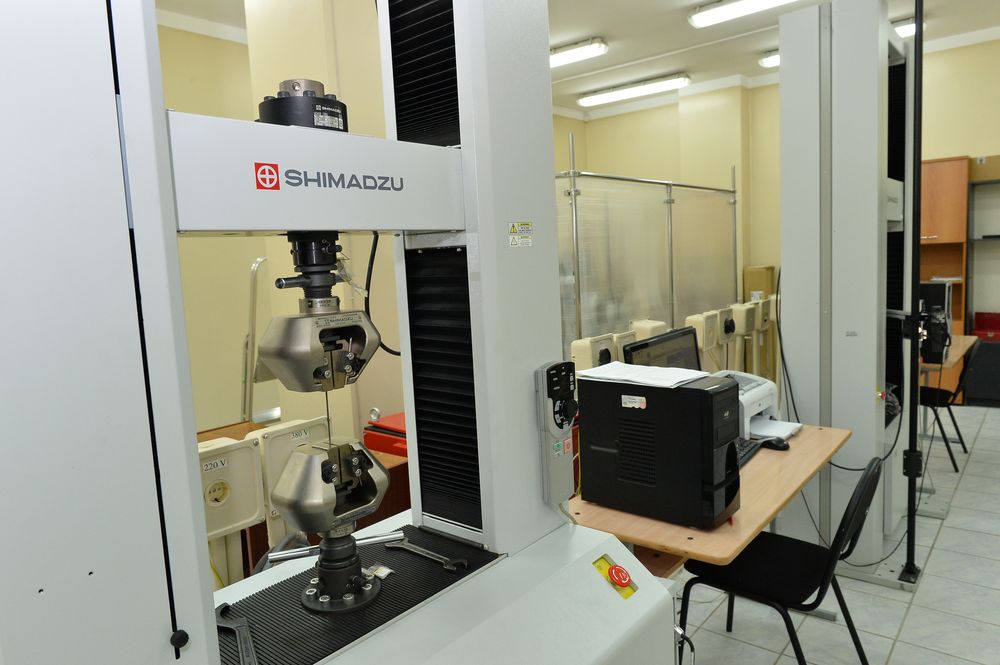
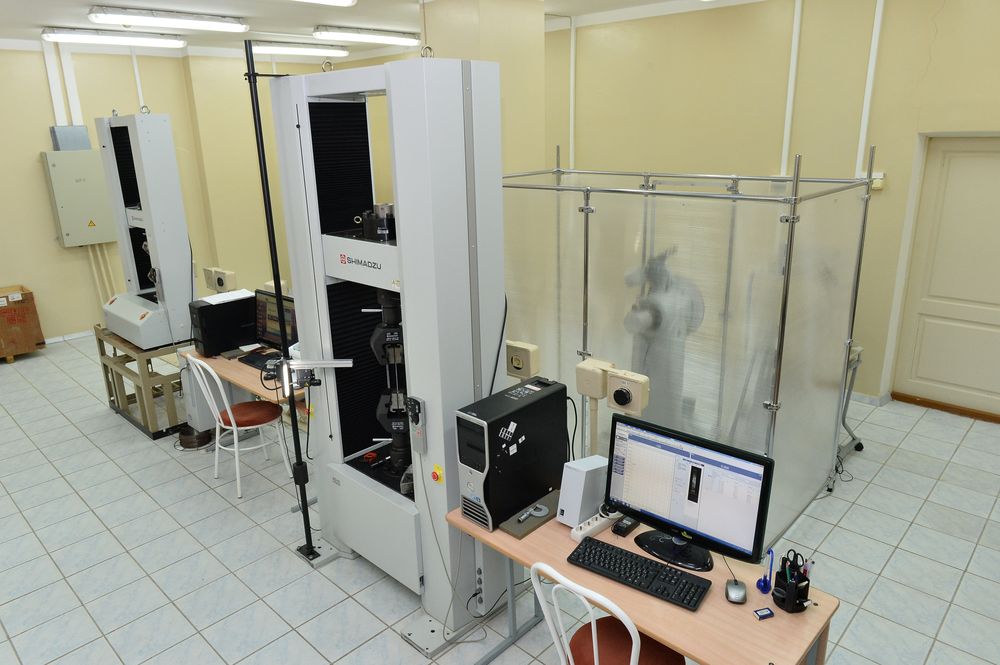
Capabilities:
A wide range of strength tests – from static strength to fatigue strength – using multiple fatigue cycles. Maximum test force: dynamic force – 200 kN, static force – 240 kN. Test stroke – up to ±50 mm.
BuehlerMicromet 5103 Buehler Micro Hardness Tester
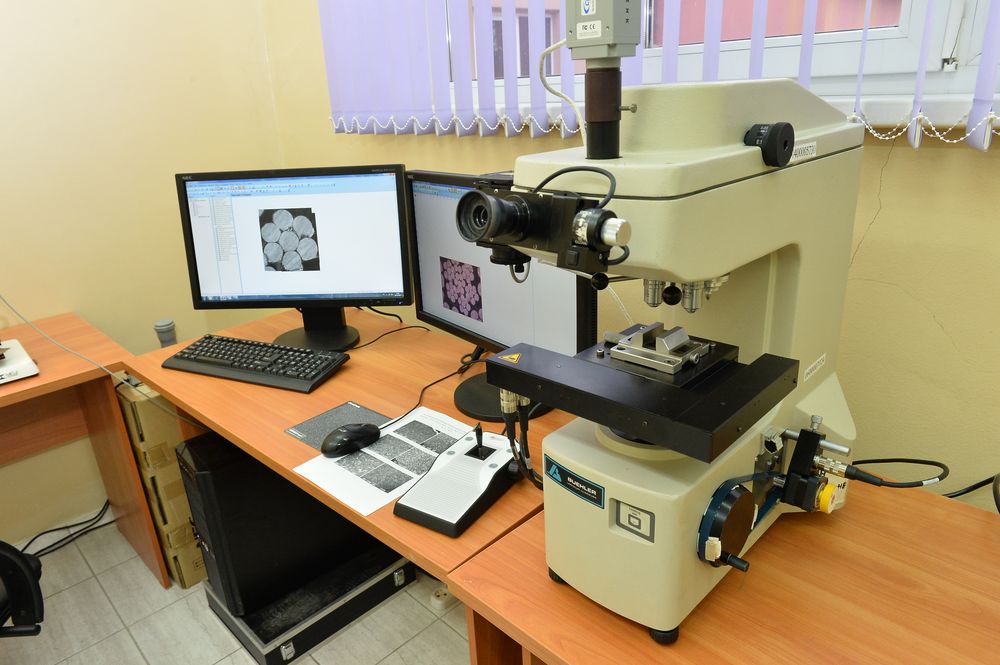
Parameters:
- Type: Digital tester with an LCD console
- Test loads: 10, 25, 50, 100, 200, 300, 500, 1000 gf
- Manual turret
- Two objectives: ´10 and ´50
- One indenter: Vickers or Knoop
- Automatic control
- Loading time: 1-30 sec.
- 50W halogen illuminator with adjustable aperture
- Manual XY sample stage
- Stage movement: 25´25mm
- Reading resolution: 0.001 mm.
МК-30 Impact Pendulum-Type Testing Machine

Specifications: МК-30 Impact Pendulum-Type Testing Machine with maximum potential energy store of 300kgf•m (~300J), 150kgf•m (~150J).
Testing capabilities: Two-point impact bend testing of metal and alloy specimens of 1-3, 5-13 and 19 types per GOST 9454-78 (Charpy test).
EMCO TEST M4C/R G3 Universal Hardness Testing Machine
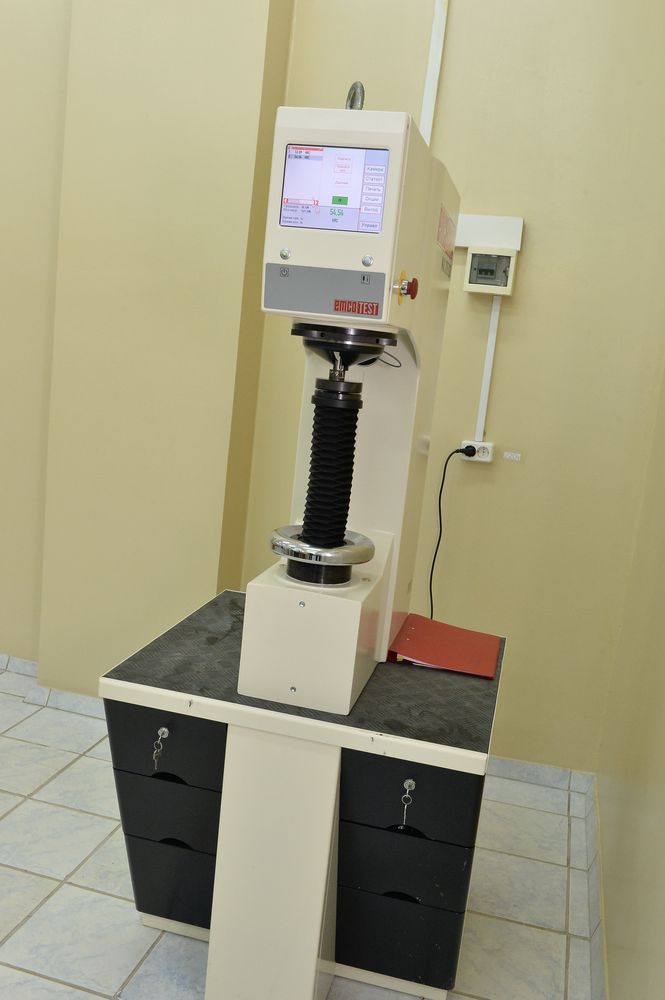
Specifications: Test loads from 5 kg to 187.5 kg. Max. test piece height – 260 mm. Touch screen. Automatic hardness measurement.
Hardness measurement:
- Vickers test. A pyramidal diamond indenter is pressed against the test surface. The Vickers hardness tester should be capable of measuring both diagonals of the impression with the accuracy of up to 1 µm.
- Rockwell test. A 120° diamond indenter or a 1.588mm-diameter steel sphere is pressed against the test surface. The Rockwell tester is equipped with a special indicator that indicates the hardness value of the tested material.
SHIMADZU AG-IC Universal Testing Machines
Specifications: Test force – 50kN, 300kN, Accuracy Class 1 acc. to ISO 7500. Speed range from 0.0005 to 500 mm/min. Max. travel during tensile test – 600 mm. TRViewX 240S video extensometer, Accuracy Class 0.5 acc. to ISO 9513, measurement range – 240 mm.
Testing capabilities:
- Tensile, compression, 3-point bend tests at room temperature.
- Tensile testing of cables and wires.
GLEEBLE 3500 Physical Simulation System
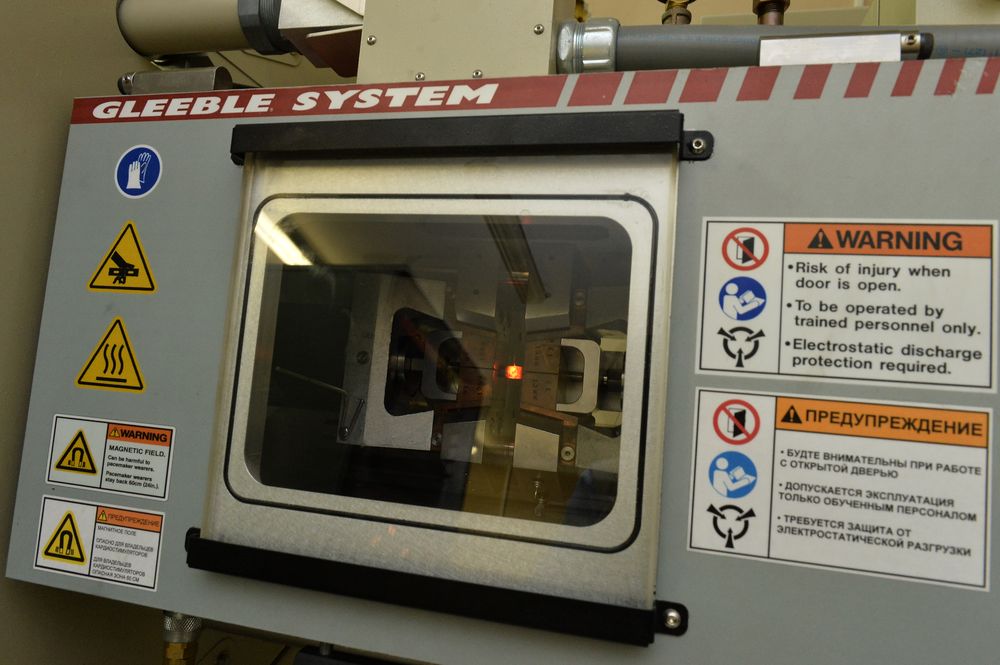
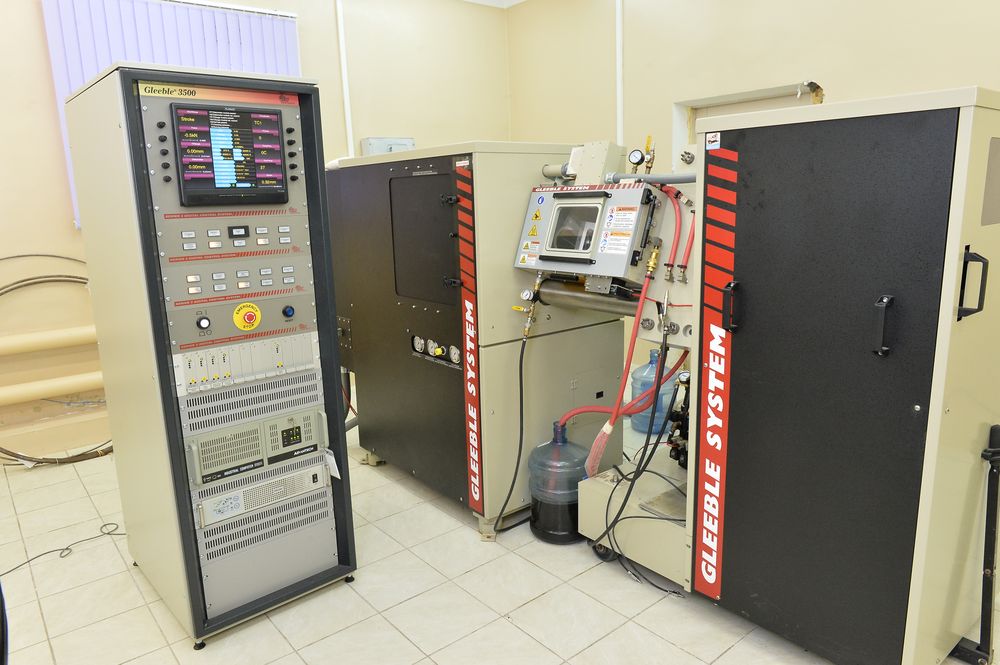
Specifications: Max. force – 100 kN. Heating and cooling rates – up to 10000 оС/sec. Max. heating temperature – 1750 оС. Displacement rates – up to 1000 mm/sec. Thermocouples are used for temperature control. Testing can be done in vacuum or protective atmosphere.
Testing capabilities:
Materials testing:
- Hot tensile/compression testing: uniaxial compression, Strain Induced Crack Opening (SICO)
- Stress curves
- Melting and solidification
- Nil strength testing
- Hot ductility testing
- Thermal cycling/heat treatment
- Dilatometry/phase transformation: heating or cooling, continuous or non-continuous, isothermal, post deformation, stress relaxation studies, creep/stress rupture
Process simulation:
- Continuous csting
- Hot rolling
- Forging
- Extrusion
- Welding (heat-affected zone studies)
- Upset butt welding
- Diffusion bonding
- Continuos annealing
- Heat treatment
- Quenching
Auxiliary Equipment
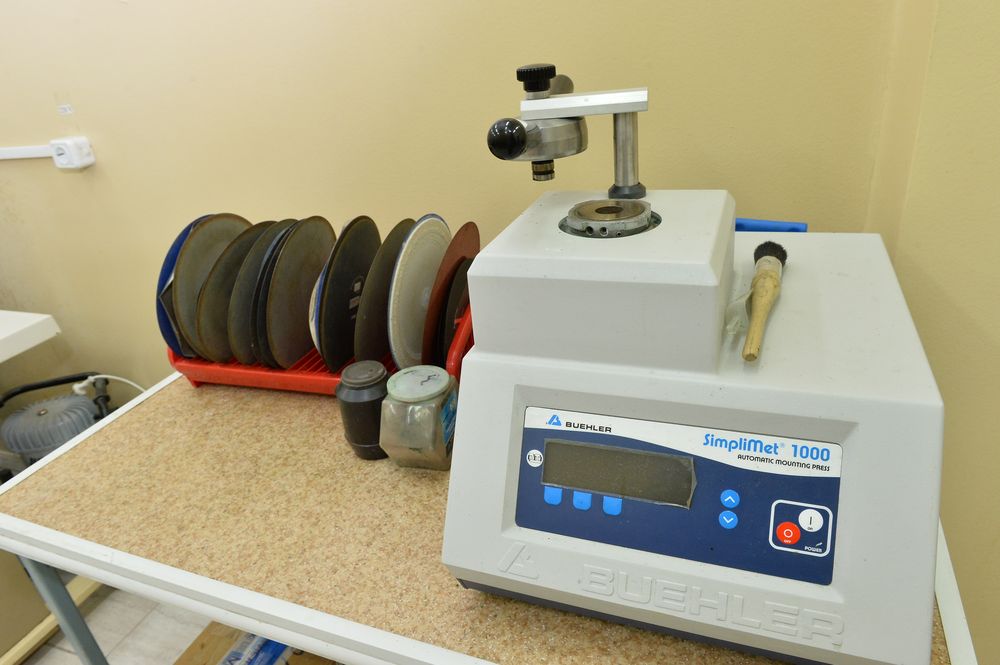
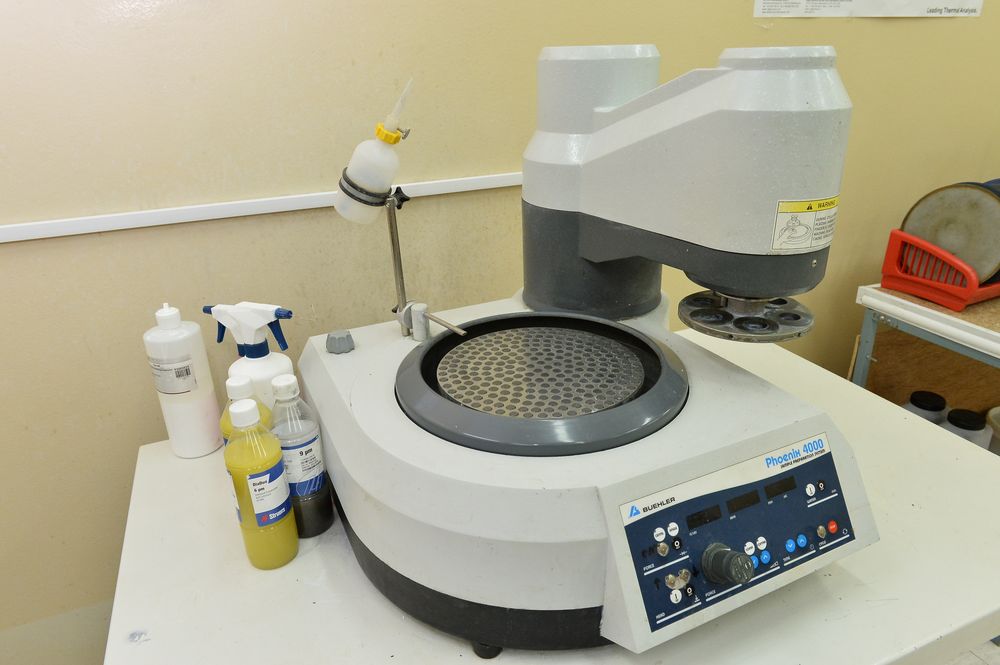
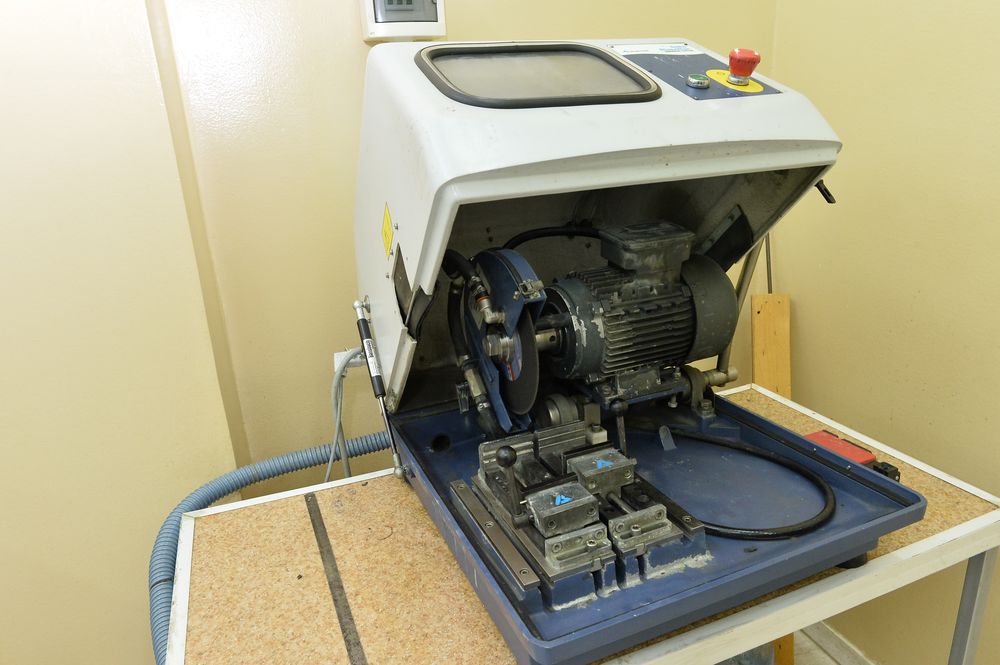
- Buehler IsoMet 4000 Precision Saw
- Buehler Phoenix 4000V Sample Grinder & Polisher
- Buehler Simplimet 1000 Automatic Mounting Press