
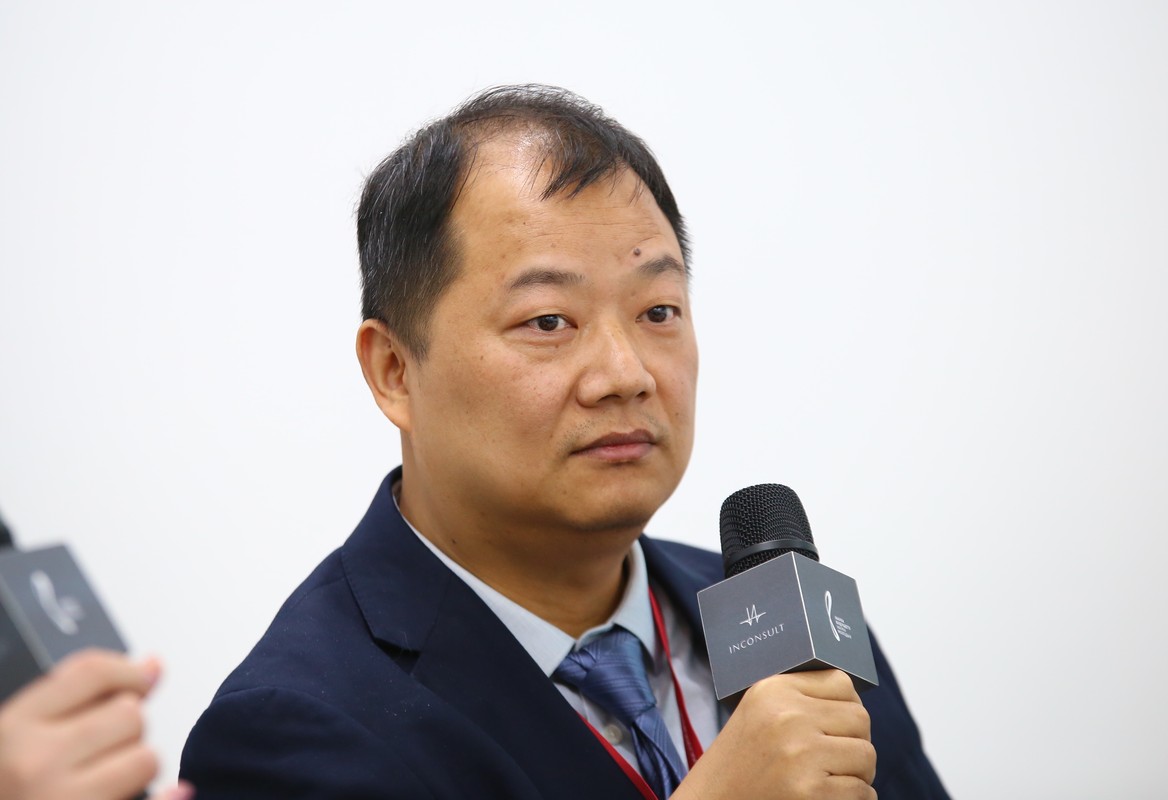
 As part of the V Congress of Young Scientists, a session entitled “Russian Science Foundation Megagrants: Russia as a Hub for Leading Scientists” was held. The Foundation presented the directions of the grant program, and the winners of the competition presented their projects and shared their plans for the future. The event showcased how the Russian Science Foundation Megagrant program strengthens Russia's scientific potential by combining international expertise with the capabilities of Russian laboratories.
On behalf of the President of Russia, the Russian Science Foundation has started holding competitions for "Megagrants." The goal of the program is to attract leading scientists to Russian laboratories to solve ambitious scientific challenges. More than 250 applications were submitted to the first competitions from representatives from over 40 countries. Sixteen scientists from China, India, and other countries were selected as winners. During the Foundation's thematic session, Andrey Blinov, Deputy General Director of the Russian Science Foundation, explained the conditions of the competition and the benefits of participating, and several winners presented their projects.
Hailiang Yu, Doctor of Technical Sciences, Chief Researcher at the Nosov Magnitogorsk State Technical University, presented the project "The phenomenon of dynamic structural and phase transformation during asymmetric rolling of polymorphic alloys and the development of methods for the production of promising new high-tech materials based on it." Professor Yu emphasized that this method of intense plastic deformation, based on the difference in speeds or diameters of rolls, makes it possible to effectively grind the structure of metals and obtain ultra-fine-grained materials with high strength, good formability and reduced anisotropy. Unlike other laboratory methods, asymmetric rolling is easily scalable because it relies on an industrially proven process.
The project combines the efforts of Central Southern University, Magnitogorsk State Technical University, and the University of Wollongong and aims to reduce technological cycles, expand the possibilities for processing difficult-to-deform materials, obtain specified microstructures without expensive alloying additives, and transform traditional rolling technologies. In the future, it is planned to integrate the method with artificial intelligence for precise control of material properties.