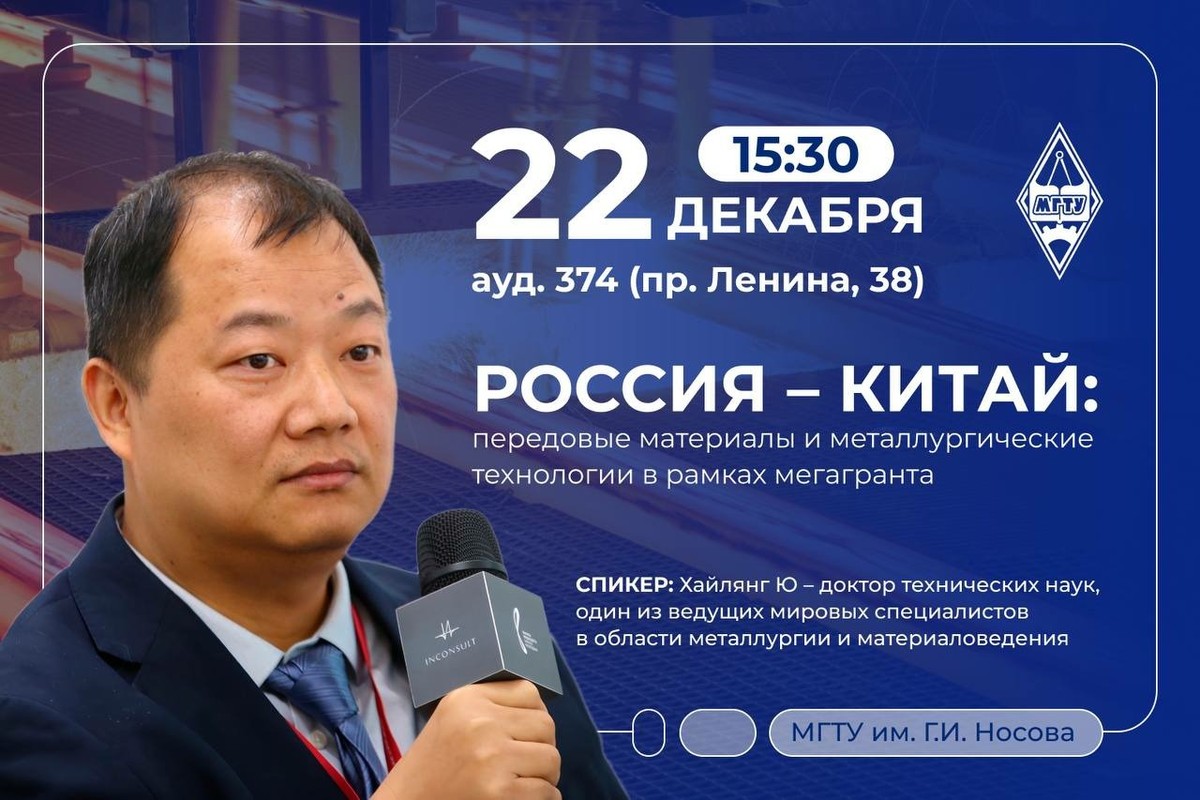
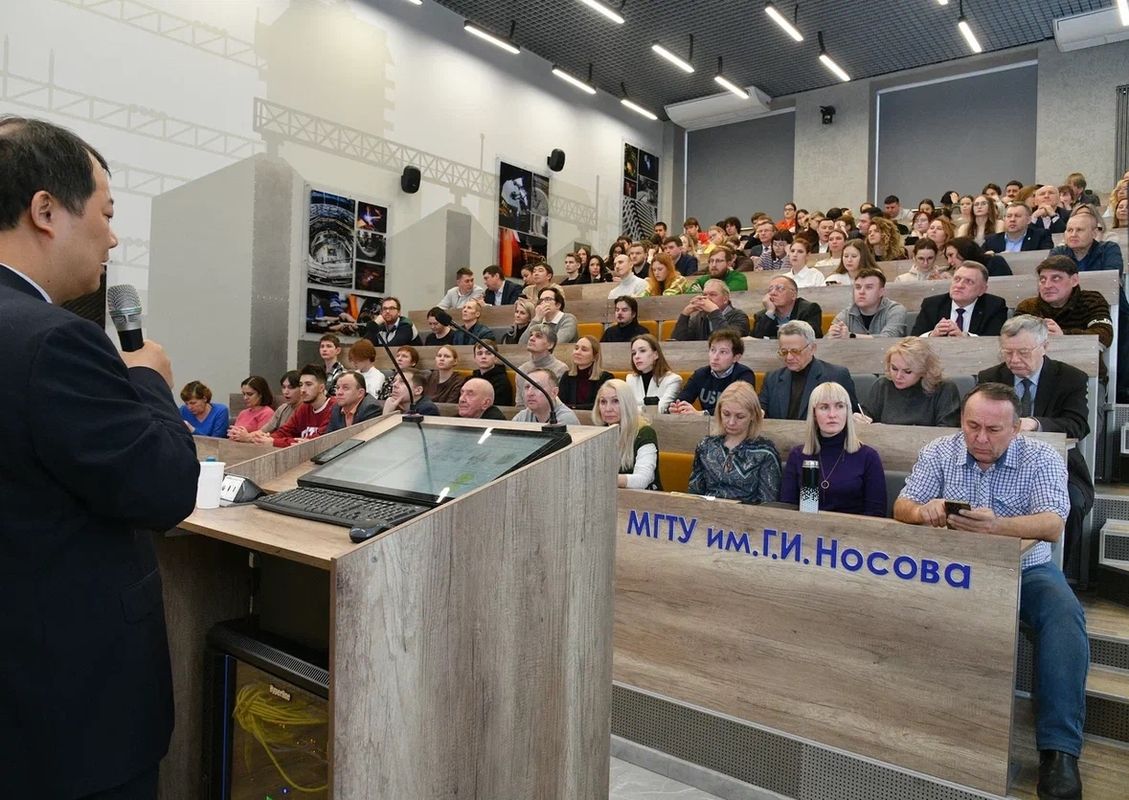
 A Lecture Haiyang Yu, a professor at Central South University (Changsha, China), a long-time partner and friend of the Nosov Magnitogorsk State Technical University, and one of the world's leading experts in metallurgy and materials science, who ranked second in the world in terms of citation among all scientists in 2024 according to Scopus, and is included in the top 2% of the most influential scientists in the world according to Scopus and Stanford University.
"This year, we launched an interesting format of open lectures and academic readings, during which our university's experts and representatives of industrial enterprises delivered open popular science lectures. These events took place both within the university and at the Prityazhenie venue. We decided to end this calendar year of open lectures on a high note," said Ildar Abdulvaleev, Vice-Rector for Educational Activities at Nosov Magnitogorsk State Technical University.
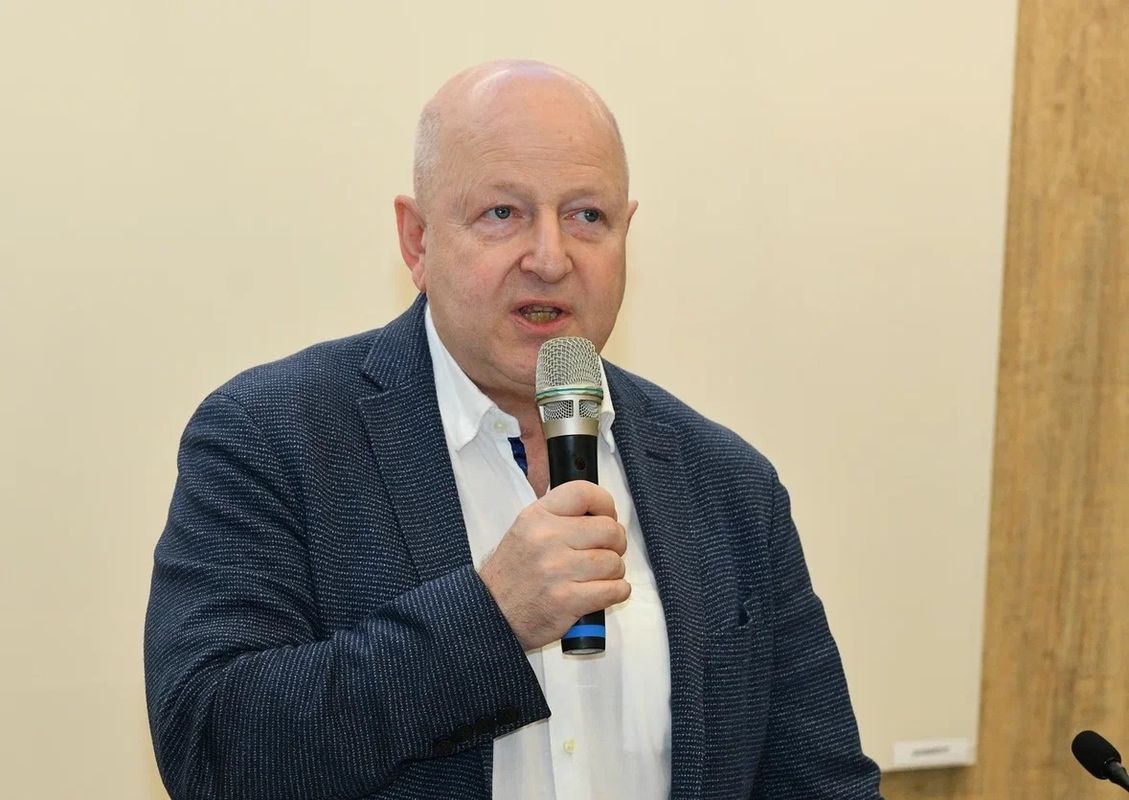 Professor Yu was introduced to students and teachers by Alexander Pesin, a professor at the Nosov Magnitogorsk State Technical University. Alexander Moiseevich explained that the team of scientists at the Nosov Magnitogorsk State Technical University has been collaborating with Professor Haiyang Yu's laboratory for about fifteen years.
"During this time, we have obtained eight joint Russian patents and twelve scientific articles. In the Russian Science Foundation competition, we ranked 13th in the country among all fields, from engineering and natural sciences to medicine and humanities. The topic of our research is "The phenomenon of dynamic structural and phase transformation during asymmetric rolling of polymorphic alloys and the development of methods for producing new high-tech materials based on this phenomenon," says Alexander Pesin, Professor at the Nosov Magnitogorsk State Technical University.
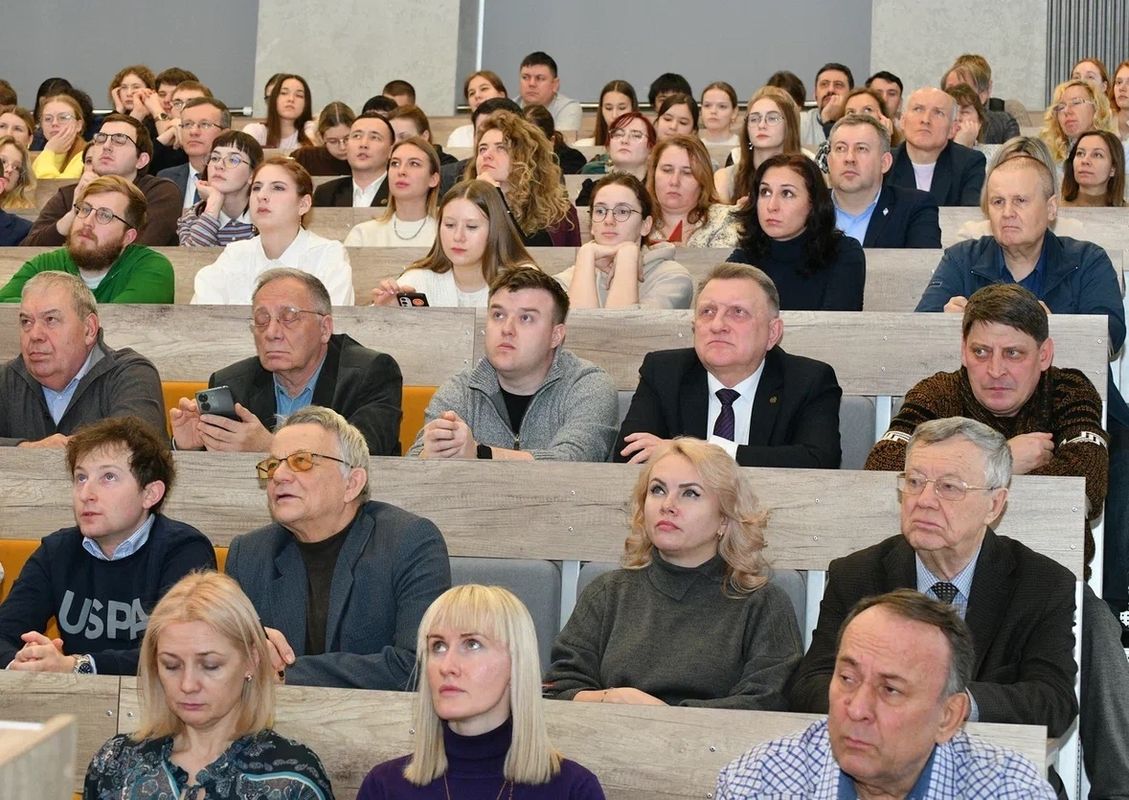 In his speech, Professor Hailiang Yu spoke about himself, his achievements, his team of scientists, the research conducted as part of the mega-grant, and the prospects for the practical application of these developments in the industry, including metallurgy, transportation, and mechanical engineering. In addition, the professor shared practical recommendations on how to prepare and publish scientific articles in highly ranked international journals, including the types of publications, how to choose journals, and what editors pay attention to.
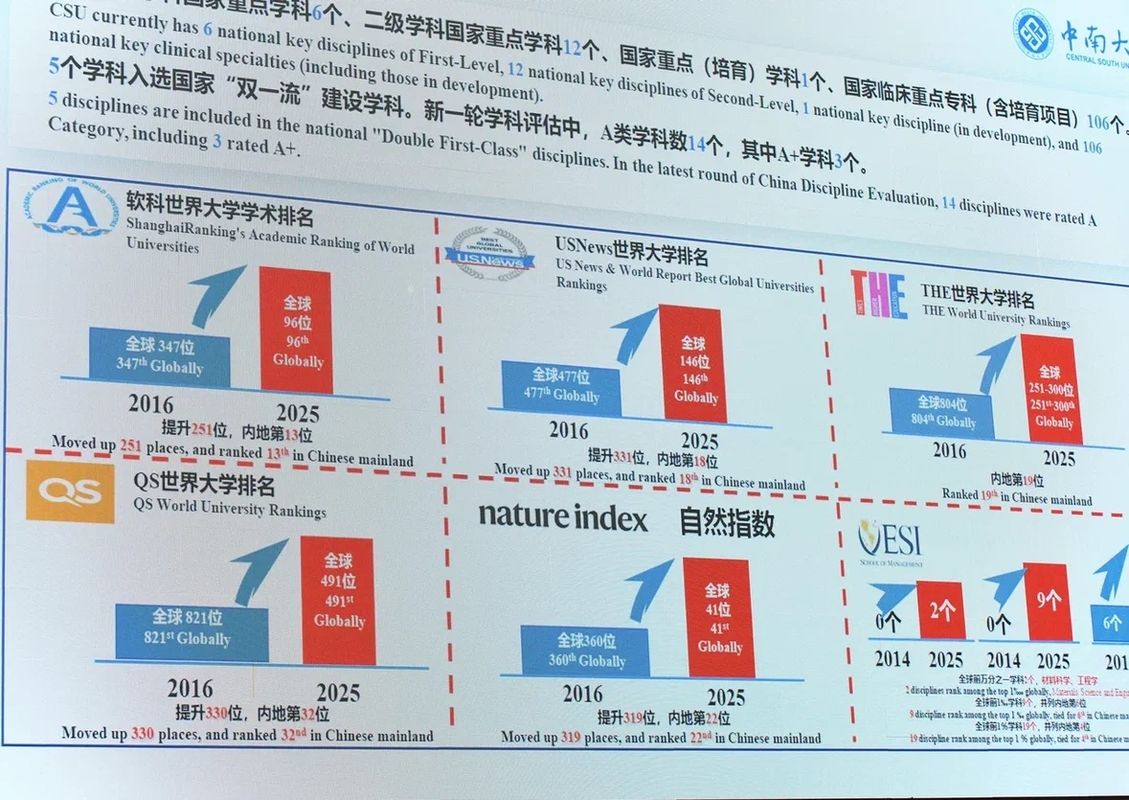
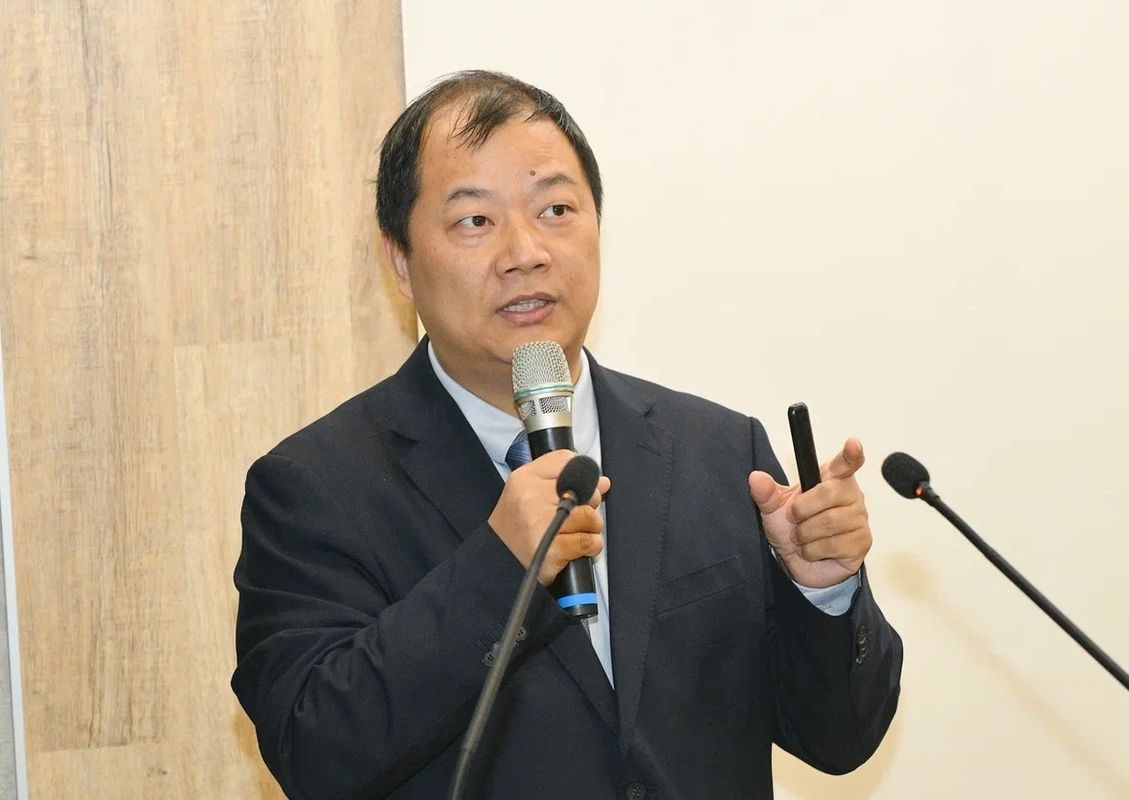 "Central South University of China is one of the leading universities in the country and a global leader in research on aluminum and light alloys. I am confident that our cooperation will bring significant scientific results. Rolling is one of the key areas of metal processing, and we have been working on asymmetric rolling in Russia and China for many years. We have a solid scientific foundation and extensive experience in this field.
With the support of the grant, we expect to gain new knowledge and technologies that will be of interest to the global scientific and industrial community," said Professor Hailiang Yu.
 Professor Yu also noted that at Central Southern University, scientists are producing thin ribbons with a thickness of about 5 microns using an asymmetric rolling mill, while in Magnitogorsk, they are working with automotive grades, which are significantly thicker. The collaboration between these two universities offers a synergistic effect.
"Combining resources and potential will allow us to develop new technological schemes that are not yet available in the global market. For example, when rolling low-carbon steel without adding expensive alloying elements such as vanadium, niobium, and titanium, it is possible to increase the strength class by approximately two times, for example, from 355 MPa to 700 MPa or higher, without changing the chemical composition, while maintaining high ductility and impact strength. The asymmetry in rolling can be achieved, for example, by using different diameters or speeds of the rolling rolls. When it comes to processing materials by pressure, rolling is one of the most popular methods. The first rolling mill was built about 200 years ago. Today, more than 70% of the metals used in industry are produced by rolling," says Professor Yu.
 At the end of the meeting, the professor answered the questions of the lecture participants. Dmitry Terentyev, Rector of Nosov Magnitogorsk State Technical University, asked about Professor Yu's impressions of his visit to Magnitogorsk and the university.
In his reply, Hailiang Yu noted that the city and the university made a very good impression on him. The professor admitted that before the trip he had certain concerns related to weather conditions and eating habits, but all expectations turned out to be in vain: he liked the cuisine, the conditions of stay, the organization of work, the atmosphere of the university, the city itself. According to him, Magnitogorsk left a very positive impression, and he is looking forward to his next visit and continued collaboration with the Nosov Magnitogorsk State Technical University.